
Hip Pain in Nepal: Advanced Treatment with PRP Therapy, Manual Therapy & Physiotherapy at MT Hospital Kathmandu
WHY THIS MATTERS
Hip pain is one of the most disabling conditions affecting adults in Nepal — yet most patients are told their only option is surgery or lifelong painkillers. At MT Hospital Kathmandu, we offer a completely different approach: a combination of PRP (Platelet-Rich Plasma) therapy, manual therapy, and specialist physiotherapy that treats the root cause of hip pain and, in many cases, eliminates the need for surgery altogether. Nepal’s pioneer in manual therapy since 2011.
Hip pain can strike at any age — from young athletes with labral tears to elderly patients with advanced osteoarthritis. Whether your hip pain is new or has been limiting your life for years, the right specialist treatment makes all the difference. At Manual Therapy Hospital, we have helped thousands of patients across Kathmandu Valley recover from hip conditions that other centres said were untreatable without surgery.
Hip Conditions We Treat in Kathmandu
1. Hip Osteoarthritis (OA Hip)
Hip osteoarthritis is the most common cause of hip pain in Nepal’s adult population, particularly in patients over 50. As the cartilage lining the hip joint gradually wears away, pain, morning stiffness, a grinding sensation, and progressively reduced walking ability develop. Many patients in Kathmandu are told that joint replacement is their only option — but for mild to moderate OA Hip, this is rarely true.
A combination of manual therapy to restore joint movement, targeted strengthening exercises, and PRP therapy to slow cartilage breakdown and reduce inflammation can significantly reduce pain and delay or entirely avoid the need for hip replacement surgery.
2. Hip Bursitis (Trochanteric Bursitis)
The hip bursae are small fluid-filled sacs that cushion the tendons and muscles around the hip joint. When these become inflamed — from overuse, poor posture, direct trauma, or leg length discrepancy — a condition called trochanteric bursitis results. The hallmark symptom is pain on the outer side of the hip and thigh, typically worse when lying on the affected side, climbing stairs, or walking long distances.
Manual therapy, targeted hip and gluteal strengthening, and PRP injections to the inflamed bursa produce excellent results, usually within 6–10 sessions.
3. Hip Flexor and Groin Pain
Tight hip flexors from prolonged sitting — extremely common among Kathmandu’s office workers and IT professionals — groin strains from sports, and iliopsoas tendinopathy all cause pain at the front of the hip and groin. These conditions are among the most satisfying to treat at MT Hospital: they respond rapidly and completely to manual therapy and progressive exercise rehabilitation.
4. Labral Tears
The hip labrum is the ring of cartilage that surrounds and deepens the hip socket, providing stability and cushioning. Labral tears cause deep groin pain, a clicking or locking sensation in the hip, and feelings of instability. They are common in young athletes and active adults, but also occur in older patients with hip dysplasia or OA. Conservative physiotherapy and manual therapy is the evidence-based first-line treatment for most labral tears, with surgery reserved for cases that do not respond.
5. Avascular Necrosis (AVN) of the Hip
Avascular necrosis (AVN) is a serious condition in which the blood supply to the femoral head (the ball of the hip joint) is compromised, causing bone death and eventual joint collapse. It is particularly common in patients with a history of long-term steroid use — very prevalent in Nepal — as well as alcohol use, trauma, and certain blood disorders.
In early stages (Stage I and II), PRP therapy combined with manual therapy and physiotherapy can halt disease progression and restore function without surgery. MT Hospital is one of the very few centres in Nepal offering a specialist combined protocol for AVN. See our dedicated AVN blog post for full details.
AVN Treatment in Nepal: PRP Therapy & Manual Therapy at MT Hospital Kathmandu
6. Post-Hip Replacement Rehabilitation
Hip replacement surgery (Total Hip Replacement / THR) is a major procedure — but the surgery is only half of the recovery. Specialist physiotherapy before and after surgery is what determines how well and how quickly a patient regains function. At MT Hospital, we provide comprehensive prehabilitation (before surgery) and rehabilitation (after surgery) programmes for hip replacement patients across Kathmandu and Lalitpur.
PRP Therapy for Hip Pain — A Game-Changing Alternative to Surgery
WHAT IS PRP?
PRP (Platelet-Rich Plasma) therapy uses your own blood to heal your own body. A small blood sample is taken, spun in a centrifuge to concentrate the platelets, and injected directly into the damaged hip tissue under ultrasound guidance. The concentrated growth factors stimulate repair, reduce inflammation, and regenerate damaged tissue — without surgery, without synthetic drugs, and without any risk of rejection.
PRP therapy represents one of the most significant advances in non-surgical hip treatment in recent years. At MT Hospital Kathmandu, PRP is administered under ultrasound guidance (USG) by Dr. Kishore Lal Shrestha (MD, DMT, MS Ortho) — Nepal’s leading orthopaedic manual therapy specialist — ensuring precise, safe delivery to the exact site of damage.
https://www.themanualtherapy.com/wp-admin/post.php?post=8989&action=edit
Which Hip Conditions Respond Best to PRP?
| Hip Condition | PRP Response | Typical Sessions |
| Hip Osteoarthritis (mild–moderate) | Excellent ✅ | 2–3 injections |
| Hip Bursitis (Trochanteric) | Excellent ✅ | 1–2 injections |
| Labral Tear (partial) | Very Good ✅ | 2–3 injections |
| AVN — Stage I & II | Very Good ✅ | 2–3 injections |
| AVN — Stage III | Moderate ⚠️ | 2–3 injections |
| Hip Tendinopathy | Excellent ✅ | 1–2 injections |
| Hip OA (severe / Stage IV) | Limited ⚠️ | Surgery usually needed |
How USG-Guided PRP at MT Hospital Works — Step by Step
- A small blood sample (15–30 ml) is drawn from your arm — takes less than 2 minutes
- The blood is placed in our centrifuge and spun for 8–12 minutes, concentrating the platelets
- The platelet-rich plasma is drawn into a syringe — ready for injection
- Using real-time ultrasound imaging, Dr. Shrestha guides the needle precisely to the damaged hip tissue
- The PRP is injected directly to the target site — the damaged cartilage, inflamed bursa, or necrotic bone
- The growth factors (PDGF, TGF-beta, VEGF, IGF-1) immediately begin stimulating repair and new tissue formation
- Post-injection, a structured physiotherapy programme begins to maximise healing outcomes
Why USG Guidance Matters
MT HOSPITAL ADVANTAGE
Many clinics in Nepal give PRP injections blindly — without imaging. At MT Hospital, every PRP injection for hip conditions is performed under live ultrasound (USG) guidance. This ensures the plasma goes exactly where it needs to go — not near the damaged tissue, but precisely into it. This is why our outcomes are consistently superior to blind injection techniques.
Is PRP Safe for Hip Pain?
- 100% natural — uses only your own blood, zero risk of rejection or allergy
- No synthetic drugs, no steroids, no anti-inflammatories
- Minimally invasive — an injection, not surgery
- Side effects: mild soreness at the injection site for 24–72 hours — this is a normal healing response
- Performed in a sterile clinical environment by a senior orthopaedic specialist
How Does PRP Compare to Steroid Injections?
| Factor | Steroid Injection | PRP Therapy (MT Hospital) |
| How it works | Suppresses inflammation temporarily | Stimulates tissue repair biologically |
| Duration of relief | 4–12 weeks typically | Months to years |
| Effect on cartilage | Damages cartilage with repeated use | Promotes cartilage repair |
| Risk of side effects | Yes — blood sugar spike, bone thinning | Minimal — uses own blood |
| Number of injections | Repeated indefinitely | 2–3 sessions, then review |
| Long-term outcome | No repair — pain returns | Genuine tissue healing possible |
Manual Therapy and Physiotherapy for Hip Pain
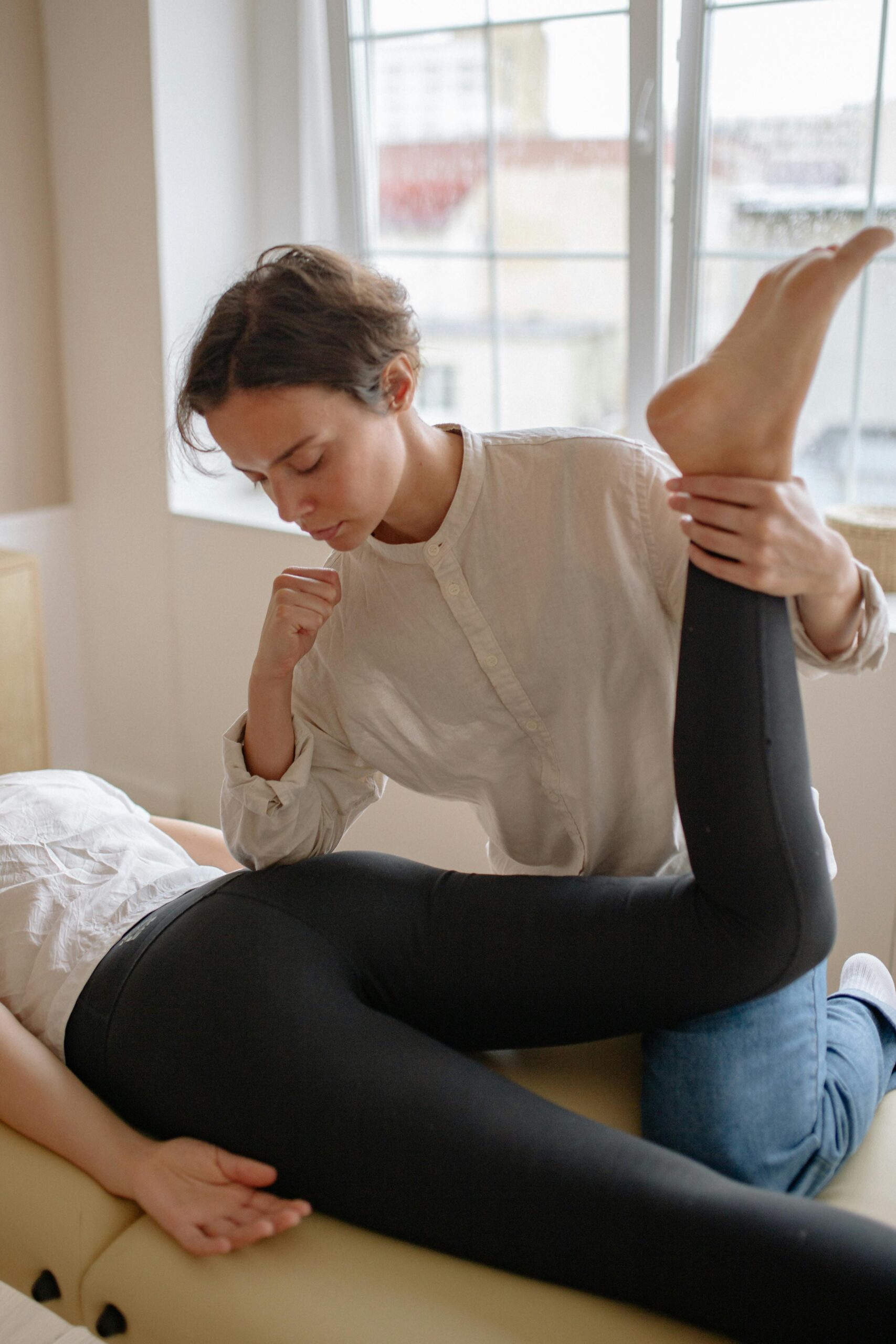
PRP provides the biological stimulus for repair. Manual therapy and physiotherapy provide the functional rehabilitation that converts that repair into restored movement, strength, and quality of life. At MT Hospital, these are never separated — they work together as a single, integrated treatment plan.
Manual Therapy Techniques for the Hip
- Hip joint mobilisation — restoring the gliding and rolling movements inside the hip joint that pain and stiffness have restricted
- Soft tissue release — targeted massage and release of the hip flexors, piriformis, iliotibial band, and gluteal muscles
- Neural mobilisation — releasing nerve tension contributing to hip and thigh pain
- Lumbar and sacroiliac joint treatment — addressing spinal contributors to hip pain (extremely common and frequently missed)
Physiotherapy Programme for Hip Pain
- Hip and gluteal strengthening — the most powerful long-term treatment for hip OA, bursitis, and labral tears
- Balance and proprioception training — restoring the hip’s positional sense and reducing fall risk
- Gait retraining — correcting altered walking patterns caused by chronic hip pain
- Electrotherapy — therapeutic ultrasound, TENS, and interferential therapy for pain and inflammation
- Home exercise programme — essential for maintaining clinic gains between sessions and preventing recurrence
Dry Needling for Hip Pain
Trigger points in the gluteus medius, TFL (tensor fasciae latae), piriformis, and iliopsoas are extremely common in hip pain patients and are a frequently overlooked contributor to ongoing discomfort. Dry needling directly to these trigger points produces rapid, targeted relief and significantly accelerates recovery.
Hip Replacement Physiotherapy at MT Hospital Kathmandu
Total Hip Replacement (THR) is a highly effective surgery for end-stage hip OA and advanced AVN — but the operation itself is only 50% of the outcome. The other 50% is determined by physiotherapy — both before surgery (prehabilitation) and after (rehabilitation). At MT Hospital, we provide both.
Before Surgery — Prehabilitation (Prehab)
RESEARCH SHOWS
Patients who complete a structured prehabilitation programme before hip replacement surgery recover significantly faster, spend fewer days in hospital, require less post-operative pain medication, and regain walking independence sooner than patients who do no prehab. Starting physiotherapy before your surgery is one of the best investments you can make in your outcome.
Our pre-operative hip replacement programme includes:
- Hip and gluteal strengthening to build maximal muscle support around the new joint from day one
- Balance and proprioception training to optimise pre-surgical stability
- Cardiovascular conditioning to improve surgical readiness and anaesthetic recovery
- Education on post-operative precautions, positioning rules, and recovery milestones
- Crutch and walking frame training — so you are not learning for the first time post-surgery
After Surgery — Rehabilitation Phases
| Phase | Timing | Key Treatments | Goal |
| Phase 1 — Early Recovery | Weeks 1–6 | Pain & swelling management, DVT prevention exercises, safe transfers, walking with frame/crutches, hip precaution education | Independent mobility, wound healing, prevent complications |
| Phase 2 — Strengthening | Weeks 6–12 | Progressive hip & gluteal strengthening, balance training, stair climbing, walking aid weaning (frame → crutches → cane) | Restore muscle strength, improve balance, reduce walking aid dependence |
| Phase 3 — Full Function | Weeks 12–26 | Advanced strengthening, return to daily activities, walking outdoors, swimming/cycling, long-term home programme | Full return to normal life without restrictions |
Hip Precautions After Replacement — What You Need to Know
- Do NOT bend the hip beyond 90 degrees for 6 weeks after traditional posterior approach surgery
- Do NOT cross your legs or ankles
- Do NOT rotate your foot inwards
- Use a raised toilet seat and a shower chair during early recovery
- Sleep with a pillow between your legs for the first 6 weeks
Our therapists will teach you all the precautions in full detail at your first post-operative appointment, including how to dress, sit, and move safely.
Frequently Asked Questions — Hip Pain Treatment in Nepal
Can PRP replace hip replacement surgery?
For early-to-moderate hip osteoarthritis and AVN, PRP combined with physiotherapy can significantly reduce pain and delay or avoid hip replacement surgery entirely. However, for advanced Stage IV OA or AVN with complete joint collapse, surgery remains the most appropriate treatment. At MT Hospital, we will always give you an honest assessment of which approach is right for your specific condition and stage.
How long does recovery from hip replacement take?
With consistent physiotherapy, most patients are walking with a cane or unaided at 6–8 weeks and return to full daily activities without restrictions at 3–6 months. Recovery varies based on age, fitness level, and the type of surgical approach used.
Can physiotherapy delay or avoid hip replacement surgery?
Yes — in many cases. For hip osteoarthritis, a combination of physiotherapy, manual therapy, PRP injections, and appropriate weight management can significantly reduce pain and delay the need for surgery by several years. Some patients avoid surgery entirely.
Do you offer home physiotherapy for hip replacement patients?
Yes. MT Hospital offers home physiotherapy visits for post-hip replacement patients in Kathmandu and Lalitpur who cannot safely travel to the clinic in the early recovery phase. All home visits must be arranged directly through MT Hospital. Please call us to discuss.
When should I start physiotherapy after hip replacement?
Ideally within 24–48 hours of surgery while still in hospital, continuing as outpatient (or home visits) as soon as you are discharged. The sooner specialist rehabilitation begins after surgery, the better the outcome.
I have been told I need a hip replacement — is it worth getting a second opinion?
Absolutely yes. Many patients who are told they need hip replacement surgery still have significant non-surgical options available, particularly if their OA or AVN is not yet at end stage. A thorough assessment at MT Hospital — including a review of your MRI and X-rays — will give you a clear, honest picture of all available options before you commit to surgery.
Why Choose MT Hospital for Hip Pain Treatment in Kathmandu?
- Nepal’s pioneer in manual therapy — established 2011, 15+ years of specialist orthopaedic experience
- USG-guided PRP injections — precision delivery by a senior orthopaedic surgeon, not blind injections
- Complete treatment under one roof — PRP, manual therapy, physiotherapy, dry needling, electrotherapy
- Individualised treatment plans — never a one-size-fits-all approach
- Two convenient locations — Baneshwor (Kathmandu) and Dhobighat (Lalitpur)
- Home physiotherapy available for patients who cannot travel to the clinic
- Honest, transparent advice — if surgery is genuinely your best option, we will tell you clearly
BOOK YOUR HIP ASSESSMENT TODAY
Whether you have been living with hip pain for years, been recently diagnosed with hip OA or AVN, or are preparing for or recovering from hip replacement surgery, MT Hospital’s specialist team is ready to help.
Baneshwor Branch: Min Bhawan, New Baneshwor, Kathmandu | Tel: 01-4622033 / 9863336363
Dhobighat Branch: Dhobighat-3, Lalitpur | Tel: 01-5188067 / 9851440805
Email: [email protected] | www.themanualtherapy.com
Open: Sunday–Friday 7:00 AM–6:00 PM | Saturday 7:00 AM–3:00 PM