
Tennis Elbow and Golfer’s Elbow Treatment in Kathmandu: Non-Surgical Recovery for Desk Workers and Athletes
**KEY FACT**
Despite the names, most people who develop tennis elbow or golfer’s elbow in Kathmandu have never picked up a racquet or a golf club. The real cause is almost always repetitive strain from typing, gripping a phone, lifting groceries, gym training, or manual work. Both conditions respond very well to targeted physiotherapy and manual therapy without surgery.
## What Tennis Elbow and Golfer’s Elbow Actually Are
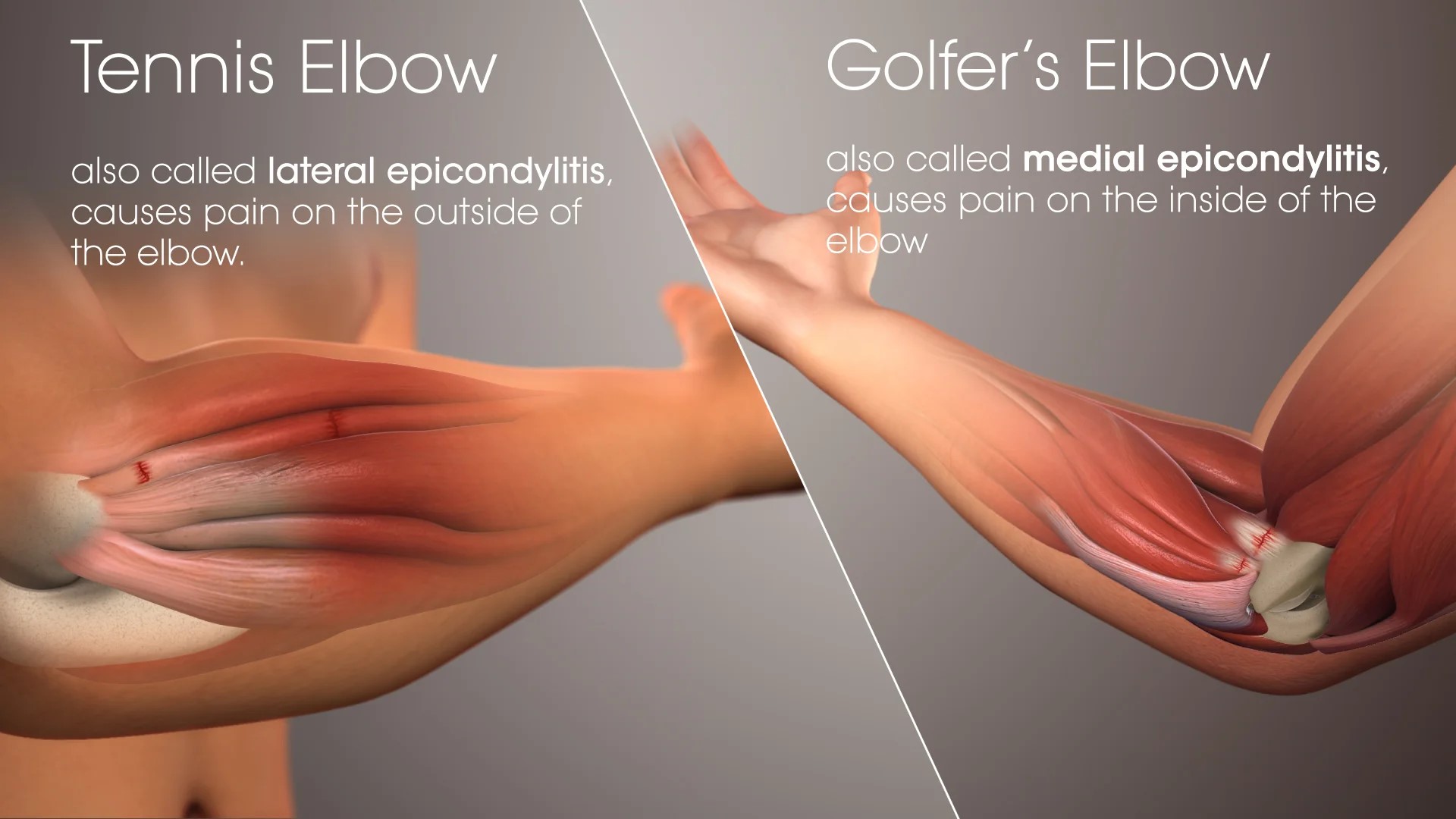
Tennis elbow (lateral epicondylitis) and golfer’s elbow (medial epicondylitis) are overuse injuries of the tendons that attach your forearm muscles to the bony bumps on either side of your elbow. Tennis elbow affects the outer elbow and is linked to repetitive wrist extension and gripping; golfer’s elbow affects the inner elbow and is linked to repetitive wrist flexion and forearm rotation.
In Kathmandu, we see both conditions frequently in:
– Office workers and IT professionals who spend hours typing and using a mouse
– Badminton, cricket, and table tennis players, both casual and competitive
– Gym-goers doing repetitive grip-heavy exercises (deadlifts, pull-ups, curls)
– Manual labourers, electricians, plumbers, and tailors
– Parents who repeatedly lift young children
– Anyone who scrolls and types heavily on a smartphone
## Why It Doesn’t Just Go Away on Its Own
Many patients try to “rest it out” for months, only to find the pain returns the moment they go back to work or training. This happens because the underlying tendon has developed small areas of degeneration (tendinopathy) rather than simple inflammation — and degenerated tendon tissue needs structured loading and rehabilitation to heal properly, not just rest. Rest alone often only delays the problem.
## How We Treat Tennis Elbow and Golfer’s Elbow at MT Hospital
Our approach combines several evidence-based techniques rather than relying on a single treatment:
– **Manual therapy** to release tension in the forearm muscles and improve mobility at the elbow, wrist, and even the neck and shoulder, which often contribute to elbow strain
– **Dry needling** to target tight, overactive trigger points in the forearm muscles that refer pain to the elbow
– **Eccentric strengthening exercises** — a specific type of progressive loading exercise with strong clinical evidence for tendon recovery
– **Activity and ergonomic modification** — adjusting your desk setup, grip technique, or training load to remove the root cause, not just the symptom
– **PRP or GFC injections**, in chronic or stubborn cases that haven’t responded to conservative treatment, performed under ultrasound guidance for precise placement
## What to Expect From Treatment
Most patients notice a meaningful reduction in pain within 2–4 weeks of starting a structured programme, though full tendon recovery for chronic cases can take 6–12 weeks of consistent rehabilitation. The key is following through on the home exercise programme between sessions — tendon healing is a gradual, loading-dependent process, and consistency matters more than intensity.
## Frequently Asked Questions
**Do I need an X-ray or MRI before starting treatment?**
Usually not for a first assessment — tennis elbow and golfer’s elbow are typically diagnosed clinically. Imaging may be recommended if symptoms are atypical or not improving as expected.
**Can I keep working out while being treated?**
In most cases, yes, with modifications. Our therapists will guide you on which movements to avoid temporarily and which can continue safely.
**Will I need surgery?**
The large majority of cases resolve with physiotherapy, manual therapy, and (when needed) regenerative injections. Surgery is reserved for the small number of cases that don’t respond after a thorough course of conservative treatment.
**Is a tennis elbow brace enough on its own?**
A brace can help manage symptoms during activity, but it doesn’t address the underlying tendon weakness — it works best alongside, not instead of, a proper rehabilitation programme.
## Book a Consultation
If elbow pain is affecting your work, sport, or daily activities, MT Hospital’s team in Baneshwor and Dhobighat can assess your elbow and build a recovery plan tailored to your specific cause and activity level. As Nepal’s pioneer in manual therapy since 2011, we treat the root cause — not just the pain.
*This article is for general information only and does not replace a clinical assessment.*